Wednesday, August 31, 2011

To unsung literary agents


Their labors rarely earn a lot of money
Except for publishers, and lazy hacks.
Some editors reject fine works and funny,
When profits plunge then shrivel prior to tax.
“Technology: a boon!” shriek twelve year-olds,
“Forget the book, just give me sexy apps;
Ten thousand zines my 4–G iPad holds,
I only want what goes on top of laps.”
That’s Penguin, HarperCollins, and the rest,
But crafty authors, watching titles vanish,
Besiege their agents, venture to suggest:
“I heard a fortune can be made in Spanish.
Translate me, please, for nothing would be finer
Than now to sell my book as well in China.”

Tuesday, August 30, 2011

Message in a bottle


If in New Haven, Conn., you live on the corner of two streets, one of which is technically a state route and the other a city street, as I do, and something happens, such as a tropical storm, and the power goes out through the entire neighborhood, and police road blocks go up over both city streets and the state route alike, encircling you like a snug and impenetrable noose, naturally you seek information, and, seeking it, you encounter the following problem: The City of New Haven transportation department refers you to the state of Connecticut department of transportation, and the state of Connecticut department of transportation refers you back to the City of New Haven transportation department. That’s if you can find the right telephone number in either case. It is understandable that under present conditions, in which everyone is working as hard as possible and doing all that they can to bring things back to normal in the aftermath of tropical storm Irene, there will be tiresome delays. However my neighbors and I can neither drive into nor out of our properties, in which there is no power, and all we are asking is for a rough estimate of how long this state of affairs is likely to continue, and, incidentally, since the barriers all around us read “CAUTION ENERGIZED AREA,” a wonderfully ambiguous phrase, what risks there are in our immediate vicinity of which we should obviously be made aware. I see no wires down, nor any risky trees. As usual, the United Illuminating Company (UI) are not easily reachable, and their online storm information impossible to decypher. The person I just spoke to did not even know what “CAUTION ENERGIZED AREA” means. No idea. So I am putting this message in a virtual bottle in the hope that someone else may come to our rescue. Until then the experience of returning home after dark at the end of the working day will continue to have a Cathy-and-Heathcliff dimension, with more prosaic stubbed toes thrown in. Thank you.

Monday, August 29, 2011

Recovery haiku


My house is clearly
Eine feste Burg, thank God.
Shame about the fence.

These days anything
At all that approaches Wall
Street gets downgraded.

Watch TV, they said.
Hard when the cables are snapped,
But far more restful.

After the maelstrom,
Busy blokes in pick-ups thirst
For chainsaw action.

My
New York Times came
Despite the storm. Pity I
Couldn’t retrieve it.

That driver stopped and
Took pictures of the damage
To my yard. Moron.

CNN wanted
Our photos—“but don’t take risks.”
Couldn’t they take them?

Fill up your bathtub,
They said, mysteriously.
Today I know why.

The grid is like a
Tree. They fix the trunk first, then
Limbs. I am a leaf.

After Irene, a
Hundred ways with dry biscuits
And canned goods. Who knew?

Irene wrought still less
Than collateralized debt
Obligations did.

Motorist! You toss
Your empty bottle as if
Irene said you could.

Dominatrix! You
Say my call is important
To you. What rubbish.

The rich banker’s house:
Gone, but for shards of onyx
Tub. That is my dream.

Saturday, August 27, 2011

The name of Hurricane Irene

According to the World Meteorological Organization, the United Nations agency responsible for studying the state and behavior of the Earth’s atmosphere, its interaction with the oceans, the climate these produce, and the resulting distribution of fresh water, “there is a strict procedure to determine a list of tropical cyclone names in an ocean basin by the responsible Tropical Cyclone Regional Body at its annual or biennial meeting.” There are five such tropical cyclone regional bodies, of which the fourth, that of North America, Central America, and the Caribbean concerns us here. From 1953 to 1979 Atlantic tropical storms were named consecutively from lists of twenty-one women’s Christian or first names arranged alphabetically (except for the letters Q, U, X, Y, and Z) on a six-year rotation. In 1979, it was decided to add men’s names to these lists, alternating with women’s, and, should the number of tropical storms ever exceed twenty-one, to continue thereafter with the names for letters of the Greek alphabet, that is, alpha, beta, gamma, delta, etc. From these lists certain names are occasionally removed for reasons of sensitivity when they stand post hoc for a storm that caused much loss of life or destruction. “It is important to note,” they say, “that tropical cyclones or hurricanes are named neither after any particular person, nor with any preference in alphabetical sequence,” whatever that means. Such names are said to be familiar to whole populations in each region, for the purposes of comprehensibility, clarity, memorability, and, in turn, better preparedness, and improved public safety. So where I sit just now, in New Haven, Conn., Hurricane Irene—Irene of the Horai, she of order, loveliness, spring flowers, cornucopias, predictability and, above all, peace—is instead charging up the eastern seaboard of the United States like a mad, bile-spitting harpy, causing immense upheaval, chaos, disruption, fear, and destruction. Moreover, and most curiously, she is to be found in the following bizarre sequence of names that were apparently selected on purpose, but according to no identifiable principle of taste, by invisible meteorologists who claim to know which names are most memorable to a majority of people in our multilingual, multicultural, multinational region. It is simply mystifying, but I suppose it could just as easily have been Arlene, Bret, Cindy, Don, Emily, Franklin, Gert, Harvey, Jose, Katia, Lee, Maria, Nate, Ophelia, Philippe, Rina, Sean, Tammy, Vince, Whitney, alpha, beta, gamma, delta, etc. So let us be gay.

Irene haiku


Pine needles rustling,

Harbingers of fall, but no:

The tree squashed my car.


No power, no gas.

Water’s off. With my flashlight,

Though, I read Miss Pym.


Mudslide trauma, then

More checks for the contractors.

What was I thinking?


A gallon per day

Of bottled water, they said.

I’d sooner have gin.


Looters rummaging

Through the wreckage of my house.

Bring me Nick’s chainsaw.


Evacuation?

Not if it means going to

A gymnasium.


Above the clamor,

Amy Chua’s kids must do

Violin practice.


“Storm strike with fury,”

Confucius say, “like dragon,

Or Mrs. Murdoch.”


After the tempest

Irksome Yalies ask: “What are

You working on now?”


“Hurricane Irene”:

Whoever named it needs a

Good Greek dictionary.


Connecticut code

Warns against use of candles.

But don’t they eat out?


If hurricanes were

Like Trumbles, their wrath would melt

Harmlessly away.


“Chipmunk!” I chortle,

“Have you some inkling of what’s

Coming down the pike?”


The book of crisis

Cuisine has no recipe

For blanquette de veau.


If the mighty oak

Blows down, why can’t it land

On a few squirrels?


A man’s house is his

Castle, except when high winds

Bugger up the roof.


Chipmunk! Your nest near

My grease trap suits you just fine,

So why jump ship now?


Could that be the sound

Of my chimney teetering

On the brink of coll…?

Friday, August 19, 2011

The penny


Today I noticed in an irritatingly large handful of small change a penny that is clearly dated 1929. This means it is real bronze (95% copper, 5% tin and a dash of zinc), in other words actually worth rather more than a penny, but that is neither here nor there. I wondered for a few moments where on earth my penny has been for all this time, and, wondering, the following bright visions wafted into partial focus. From the United States Mint in Philadelphia, gleaming and new, together with tens of thousands of others my penny was delivered under armed guard to the Federal Reserve Bank of New York. According to standard contractual arrangements, they consigned it to the Lower Manhattan branch of the Lincoln-Alliance Bank and Trust Co. Soon afterwards my penny found its way into the pocketbook of a clerk in charge of the wire room at the bonding house of the New York Stock Exchange firm of Sutro Brothers. Ruined in the crash, she threw herself out of a fortieth-floor window onto Wall Street, and of course died instantly. My penny therefore spent some days in the custody of the New York Police Department, before being handed over to her heirs with a few other relatively undamaged personal belongings. After a period of mourning as brief as that of Clytemnestra, these rather distant relations in Brooklyn released it back into circulation at Coney Island. Thanks to organized crime, my penny migrated thence to the tray of a cigarette vendor in a Chicago cinema. Afterwards it was brought to Kansas City, Mo., and then carried by an anthropologist all the way to San Francisco, Calif., by rail, before commencing a long period of hibernation in a cookie jar. The cookie jar was disposed of in accordance with the instructions of a testator, who before he died of a stroke in 1956 relocated several times, ultimately to Fresno. Thus returning to the banking system, my penny was soon propelled by air back to the east coast. There a freight forwarder and shipping agent used it to play a conjuring trick in a cocktail lounge not far from Ildewild Airport, part of a determined effort to seduce an off-duty stewardess (Braniff). Failing, the next morning he took my penny in his van to Rochester, N.Y., and left it in a dish at the front counter of a small diner. My penny went with his share of tips to the short order cook, who presently took it with him on vacation to Cape Cod. This was in the summer of 1968. My penny was then handled briefly and in rapid succession by a recently ordained Unitarian minister, an out-of-work soul singer, and two or three volunteer collectors for charity, curiously the same charity, before landing in an amusement arcade in Atlantic City, N.J. Already too insignificant for most slot machines, it found its shamefaced way back to a small and undercapitalized local bank, and presently reappeared on the dashboard of a lorry in Trenton. Soon afterwards my penny crossed back over the Hudson in the hip pocket of a senior Port Authority official who lost it down the back of a sofa in a prosperous Lower East Side brothel. A further period of slumber ensued, before my penny was retrieved by a frugal re-upholsterer in Long Island City. Incredible as this may seem, he banked it. Six months later, my penny went to an unscrupulous arms dealer changing numerous crisp Turkish 500,000 lira banknotes at the foreign desk in a Midtown branch of Citibank. My penny annoyed him, so a few days later, upon relinquishing his eleventh-floor suite at the Carlyle, he tossed it on the vanity. Later that morning, a hard-working chambermaid took up my penny. It lurked in her battered purse for seventeen months, two weeks, three days, ten hours, and some minutes when, just by the Astoria Boulevard subway stop, she was robbed at gunpoint and her purse emptied. This was in February 1983. There followed a brief period for which I cannot account, though numerous court appearances and at least one confiscation by officers of the law definitely occurred. Fortunately through this my penny sustained no significant damage. Nor was it ever thrown in the trash; nor placed on the railway by truant schoolchildren eager to see it squashed under a bogie; nor dropped into a sewer or storm drain where so many others apparently do end up. Reverting to the control of a front-line cashier or teller thanks to the U.S. District Court for the Southern District of New York (White Plains)—when acquitted of several counts of aggravated assault, a felon with three prior convictions overlooked it when reclaiming his personal belongings, so lost property were called in—my penny became indirectly involved with the Savings and Loan catastrophe because it was carried several times back and forth to California by Charles Keating himself, before dropping—ping!—onto a sidewalk in Beverly Hills. There a bag lady picked it up. For several weeks she shook it in her little paper cup, together with other coins of small denomination, but ultimately shook it onto the floor of a bus. The bus driver, unusually fastidious, picked it up at the end of her shift, and, perishing not long afterwards as a consequence of chronic diabetes, yielded the penny to a grieving grandson. He put it in his piggy bank. The piggy bank was emptied during the recession of the early 1990s, and this time my penny transited through the U.S. postal service. It was given as change when a graduate student on vacation from Amherst bought a prepaid envelope and ten domestic postage stamps. Back in Massachusetts, this young man misplaced my penny in his grubby backpack, right down at the bottom with a few crumpled gum wrappers and some dusty old marijuana leavings. Appointed to a junior position at Lehman Brothers, he peremptorily and, as it turns out, unwisely consigned his back-pack to the Salvation Army, and my penny was discovered in the workroom adjoining their Thrift Store at 271 Appleton Street, Holyoke, Mass. It was tossed into the cash register. It passed on yet again, this time to an itinerant but shrewd collector of old vinyl LPs, who I gather back home in Boston habitually empties his pockets of all coins and puts them into a large canvas bag that lives on the dresser, and once a year around Thanksgiving indulges in the giddy pleasure of depositing the lot into his bank account. By this mechanism my penny made its way onward to the petty cash box in the front office of a minor religious order. It was stolen by a middle-ranking nun and spent by her, clandestinely, on a pair of naughty undies ($29.99, using the exact money for speed, she thought mistakenly). The lingerie people routinely deposited my penny into their number 2 account at TD Bank in New Haven, Conn., whence it was lobbed to the cash register at Starbucks, which is where I received it this morning with other coins and a cup of coffee in exchange for four one-dollar bills. The beauty of these schemata is that nobody can possibly show that any of them are not true.

Thursday, August 18, 2011

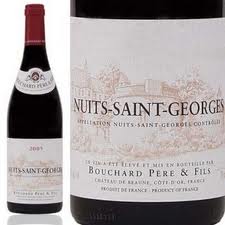
Nuits St. Georges

Curious, isn’t it, how little threads join wildly different moments? A few weeks ago I was in the dining car of the Blue Train, somewhere not far from Beaufort West in South Africa, jotting down with deep skepticism the brief but extravagant description of Klein Constantia printed in the wine list. Back in New Haven, this led me to Jane Austen, Charles Dickens, Napoleon and creepy old Baudelaire, who in the Fleurs du mal reckoned he preferred the elixir of his lover’s mouth over opium, or the fine vintages of Nuits St. Georges, and Constantia. I bet he was fibbing about the opium. Anyway, I now know that the vin de Constance that flourished before phylloxera was everything it was cracked up to be, but how delightful, only a few days later, to bump into Nuits St. Georges again, this time in London, and as a prop exquisitely chosen by Barbara Pym in Excellent Women:

I sat patiently while William and the waiter consulted in angry whispers. A bottle of wine was brought. William took it up and studied the label suspiciously. I watched apprehensively as he tasted it, for he was one of those men to whom the formality really meant something and he was quite likely to send the bottle back and demand another. But as he tasted, he relaxed. It was all right, or perhaps not that, but it would do.
“A tolerable wine, Mildred,” he said. “unpretentious, but I think you will like it.”
“Unpretentious, just like me,” I said stupidly, touching the feather in my brown hat.
“We really should have a tolerable wine today. Spring seems to be almost with us,” he observed in a dry tone.

“Nuits St. Georges,” I read from the label. “How exciting that sounds! Does it mean the Nights of St. George? It conjures up the most wonderful pictures, armour and white horses and dragons, flames too, perhaps a great procession by torchlight.”

He looked at me doubtfully for a moment and then, seeing that I had not yet tasted my wine, began to explain that Nuits St. Georges was a place where there were vineyards, but that not every bottle bearing the name on the label was to be taken as being of the first quality. “It might,” he said seriously, “be an ordinaire. Always remember that. A little learning is a dangerous thing, Mildred.”

Drink deep, or taste not the Pierian spring,” I went on, pleased at being able to finish the quotation. “But I’m afraid I shall never have the chance to drink deep so I must remain ignorant.”

“Ah, Pope at Twickenham,” sighed William. “And now Popesgrove is a telephone exchange. It makes one feel very sad.” He paused for a moment and then began to eat with great enjoyment.


I gather that vintages of Nuits St. Georges are produced in the part of Burgundy called, not surprisingly, Côte de Nuits. I’m not sure I have ever tasted one, not even an ordinaire. Also, I had to go and look up the couplet from Pope. It comes from Part II of An Essay on Criticism (1711), which goes to show you how very safe I am, rather like Mildred. Notice, though, the brilliance of Barbara Pym’s comic prose: those angry whispers, the feather, the endearing recklessness of Mildred’s effort to generate conversational momentum and the banality of William’s effortless and entirely unwarranted condescension, above all the telephone exchange. Most satisfactorily near the end of the novel Mildred seizes the chance to lob Nuits St. Georges right back into William’s court, after the manner of Dorothy Round Little. Lovely, and now I must take out the rubbish.

Wednesday, August 17, 2011

Excellent Women

In London over the weekend I picked up a copy of Excellent Women by Barbara Pym (1952), and devoured it. Notwithstanding Alexander McCall Smith’s remark in the new introduction“One does not laugh out loud while reading Barbara Pym; that would be too much. One smiles.”—I think it’s one of the funniest novels I have ever read. Perhaps this is because there is so much of Mum contained in the voice of the narrator Mildred Lathbury, everything from a profound distaste for being addressed as “dear,” through all forms of sharp observation, treating seriously what others too distracted by self-importance regard as trivia, to an extremely well-developed and healthy sense of the ridiculous. Mrs. Gray, William Caldicote, Mrs. Bone, Sister Blatt, and the mysterious Miss Jessop are delightful exempla of the middle-class urban grotesque then flourishing in postwar London. Following last week’s deeply shocking riots, I suspect the metropolis is beginning to re-acquire something of the same bleak atmosphere, though admittedly free of shared bathrooms and smoke from dismal coal fires. Certainly Mum had a complete run of the novels of Barbara Pym neatly arranged on the shelf above the phone at Denham Place, and I have a vivid recollection of her quietly chuckling to herself whilst reading one, propped up in bed with a cup of tea. Why did I not follow the prompt while she was still alive? No doubt part of the answer is contained in the question, but I am sure it is better late than never. I hope she would be pleased; I am simply grateful:

Rockingham! I snatched at the name as if it had been a precious jewel in the dustbin.

The burden of keeping three people in toilet paper seemed to me rather a heavy one.

There can be no exchange of glances over the telephone, no breaking into laughter.

Virtue is an excellent thing and we should all strive after it, but it can sometimes be a little depressing.

Men love messing about with paint and distemper.

I felt it was not a very suitable remark for a clergyman’s widow to have made, though it was certainly amusing in a rather cheap way.

I supposed that Dora and I, who had both been fat as schoolgirls, could now stand side by side singing “Frail children of dust, And feeble as frail,” without a tremor or the ghost of a smile. It was rather sad, really.

“Hullo! You look like a wet week at Blackpool,” Sister Blatt’s jolly voice boomed out of the dusk.

“Do you think they have jumble sales in Belgravia?” asked Mrs. Gray; “that hadn’t occurred to me.”

The room seemed suddenly very hot and I saw Mrs. Gray’s face rather too close to mine, her eyes wide open and penetrating, her teeth small and pointed, her skin a smooth apricot colour.

“Do you think Mrs. Gray will marry again?” I asked craftily…/ “I don’t know…widows nearly always do marry again.” / “Oh, they have the knack of catching a man. Having done it once I suppose they can do it again. I suppose there’s nothing in it if you know how.” / “Like mending a fuse,” I suggested, though I had not previously taken this simple view of seeking and finding a life partner.

“I wonder if they have any picture postcards of this garden?” / “Oh to send to William, you mean?” / “Yes, perhaps to William, but I’ve already sent him one.” / “Oh, you mustn’t overdo it, or he’ll think you’re running after him.” / I agreed that I mustn’t and imagined William’s beady eyes, round and alarmed.

She did not look like the kind of person who could possibly do anything for which an apology might be demanded.

Miss Jessop made a quavering sound which might have been “Yes” or “No” but it was not allowed to develop into speech, for Mrs. Bone broke in by telling Everard that Miss Jessop wouldn’t want any sherry.

Everard Bone was at a meeting of the Prehistoric Society. It sounded like a joke.

“Miss Jessop and I are very much interested in the suppression of woodworm in furniture.”

Birds, worms, and Jesuits…it might almost have been a poem, but I could not remember that anybody had ever written it...

Sunday, August 7, 2011

The engagement ring

Dad kept everything. Tucked inside the back cover of the earliest of his many scrapbooks is the receipt for Mum’s engagement ring. He bought it on March 2, 1948, from W. M. Catanach of Catanach’s (est. 1880), who then occupied premises on the corner of the Royal Arcade and Little Collins Street. Incredibly they are still going strong. The item is a “W[hite] G[old] & platinum 3 st[one] Diamond and Sapphire Ring,” and the price was high: £68 10s. When in 1949 Dad began work as a lowly law clerk at Mallesons his salary was £10 a week.

Saturday, August 6, 2011

Forever Mum

On Ash Wednesday, February 16, 1983, fanned by hot winds of up to nearly 70 miles per hour, about 180 wildfires burned over more than a million acres of land stretching right across Victoria and South Australia, many of them merging to produce conditions of frightening savagery. Seventy-five people were killed, seventeen of them volunteer firefighters, and over 340,000 sheep, 18,000 cattle, and innumerable native birds and animals. 3,700 buildings were destroyed in the firestorm, including Mum and Dad’s weekend place at Upper Beaconsfield. The process of cleaning up and rebuilding took years, but by the time Dad took this photograph in November 1985, a few months shy of Mum’s sixtieth birthday, they had managed to deal with the worst of it. Local contractors felled this enormous gum tree; I presume it was beyond salvation because she loved her trees, but Mum took over from there. Methodically, patiently, indomitably she built a succession of carefully controlled bonfires that eventually consumed the whole damned thing, just as Aunt Anne did some years earlier (come to think of it) at their pretty place on the right bank of the Tambo, upstream from Swan Reach. In each case those tough sisters were as proud as punch, as well they might be, but Mum’s Farmer-Giles pose is characteristically good-humored, even self-deprecating, but quite obviously real also. She was simply amazing.